Endangered Animal Project is an eight-movement work giving voice to endangered species across the planet.
I. Arctic (~6 minutes)
Arctic portrays the cold, restricted vastness of a polar world under threat. The music unfolds through sudden shocks—fractures that drop like icebergs breaking apart, crashing into the sea, and sending violent echoes across frozen air. Each rupture is followed by silence, emphasizing the tension of suspension, as if the environment itself is holding its breath. Electronics and extended instrumental effects conjure splintering surfaces, icy resonance, and splashes of sound that vanish into stillness. The textures remain sparse, confined, and brittle—suggesting both the immensity of the Arctic and its fragility. In the end, the turbulence subsides into a solitary piano line: delicate, uncertain, and exposed. Its quiet voice lingers like a warning, a trace of life in an environment collapsing into silence.
II. Whale (~9 minutes)
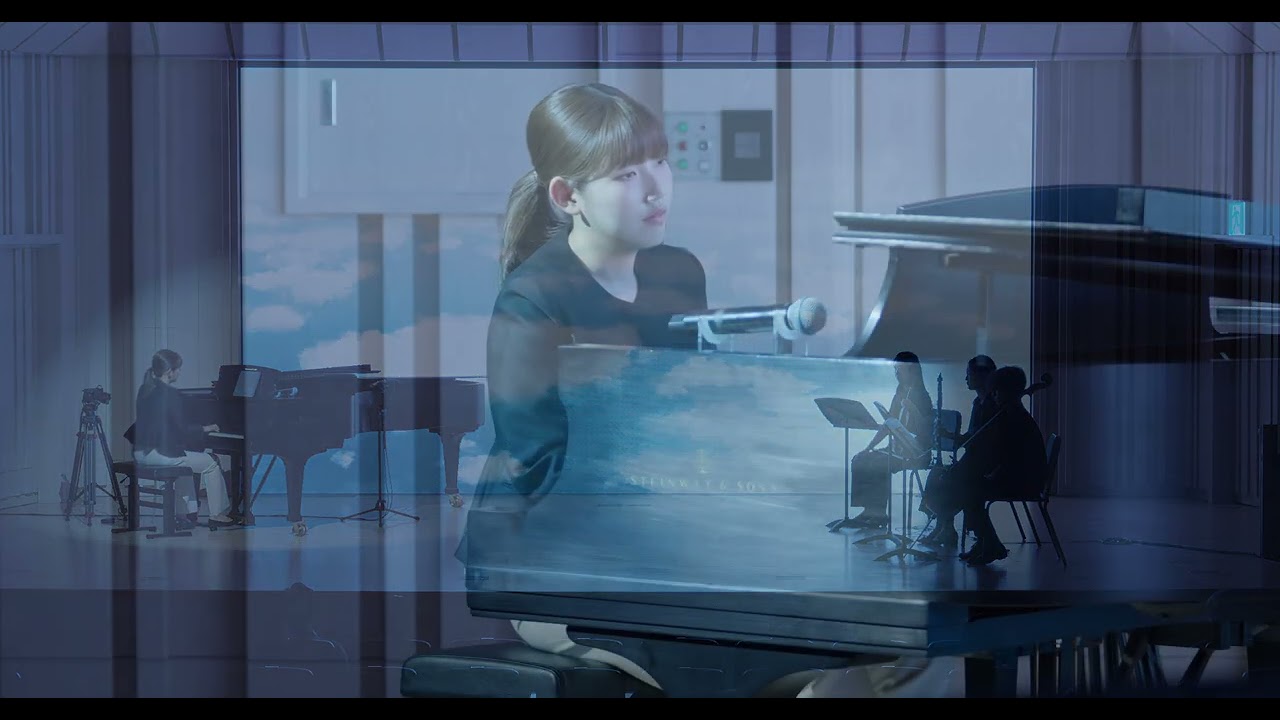
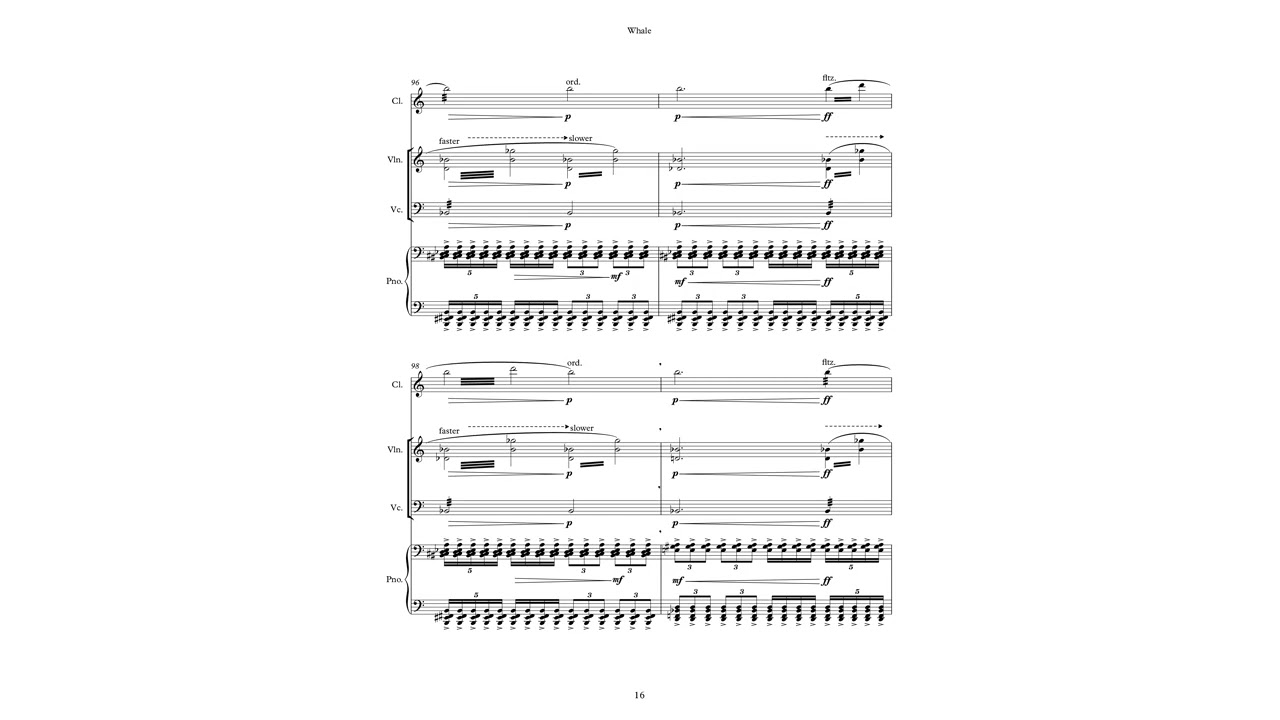
Whale is inspired by the resonant and mysterious whale song echoing through the deep sea. Whales, the largest mammals on Earth, are known to produce some of the most complex and long-range acoustic signals among non-human species. Of particular focus is the North Atlantic Right Whale, a critically endangered species whose haunting calls continue to reverberate through oceans despite its plummeting population. This piece musically reimagines the whale's sonic presence, its slow and spacious breath, and the vast, low-frequency communication that spans miles underwater. Expansive melodies, glissandi in strings and clarinet, and sustained wind tones symbolize the whale's call. The whale's vocalizations are translated through various instrumental timbres and techniques. Through silence, resonance, and disappearance, the piece reflects the fading presence of whales in our world.
III. Forest I (~6 minutes)
Forest I portrays a serene and delicate vision of nature—a moment suspended in breath and stillness. The music unfolds with subtle layers, fragile tones, and gentle textures, firmly grounded in major harmonies that embody serenity, life, and balance. Rather than dramatizing sound, the work highlights restraint and transparency. Soft instrumental colors flow into one another, evoking the pulse of air, the shimmer of leaves, and the quiet endurance of living things. The piece becomes a meditation on life's persistence: a fragile yet luminous balance that embodies both the vulnerability and beauty of the natural world.
IV. Bee (~5 minutes)
Bee captures the vitality and restless motion of a hive. From the sound of wingbeats and vibrations, the music expands into overlapping layers, creating the impression of a community moving as one. Fast, steady rhythmic figures trace buzzing lines of motion, scattering and recombining to reflect communication, order, and collective life. Midway, the sound darkens briefly, hinting at the threats that put bees at risk—habitat destruction, environmental change, and human activity. Yet the piece does not end in silence. Instead, its energy surges again, closing with lively brightness—as if wishing that bees might continue to thrive and remain by our side.
V. Forest II (~6 minutes)
Forest II is a dark and powerful portrait of the woodland in decline. It begins with a solitary violin line, heavy with sorrow, even agonizing, that sets the tone for a world shadowed by loss. The ensemble builds with weight and intensity, grounded in minor harmonies that evoke grief, unrest, and persistence. Rather than offering resolution, the music presses forward with a heavy presence, leaving the listener inside a forest that mourns and resists its disappearance.
VI. Frog (~9 minutes)
Frog is a nocturnal opera staged by nature, where different species contribute distinct rhythms and timbres to form a living, asynchronous polyrhythmic chorus that cannot be replicated by human technique. The music embraces the non-synchronized logic of frogs' calls, crafting an organic orchestration in which each instrument becomes its own percussion unit. Within this chorus, the voice of the Panamanian Golden Frog grows increasingly rare, embodying the sorrow of vanishing habitats. Its call becomes a cry that struggles to be heard—an outburst that rises instead of fading. The piece does not end in silence, but with an intensified resonance, like a desperate shout echoing against extinction.
VII. Desert (~7 minutes)
Desert begins with two minutes of electronics alone—an arid, desolate soundscape sculpted from wind-like noise, brittle crackles, and sand-like textures. Out of this landscape, violin and piano unfold in florid, cadenza-like lines—flowing, intertwining melodies that rise and fall as if searching for traces of life. The ensemble grows increasingly intense, building toward a final surge: an immense burst of sound, as if the desert itself were collapsing into a vast sonic cloud. The piece ends not in silence, but in an overwhelming resonance that lingers like the echo of a vanishing world.
VIII. Elephant (~7 minutes)
Elephant reflects both the dignity and the vulnerability of one of Earth's most intelligent and emotionally complex creatures. Inspired by the Asian elephant, whose survival is threatened by habitat loss and human conflict, the piece portrays its grandeur, vitality, and pain. Steady, grounded rhythms on the beat suggest deliberate footsteps, anchoring the music in weight and presence. At the center, sorrowful cries break through—voices of grief echoing a world where elephants are slowly disappearing. The work becomes both a celebration of their majesty and a lament for their fading presence—a soundscape where joy and sorrow coexist.
 Click to Play (YOUTUBE)
 Click to Play (YOUTUBE)